
Knee | MPFL Reconstruction
The medial patellofemoral ligament (MPFL) is an important stabilizing ligament on the inside of the knee that helps keep the kneecap in position. MPFL reconstruction may be recommended for patients with recurrent kneecap instability or dislocation.
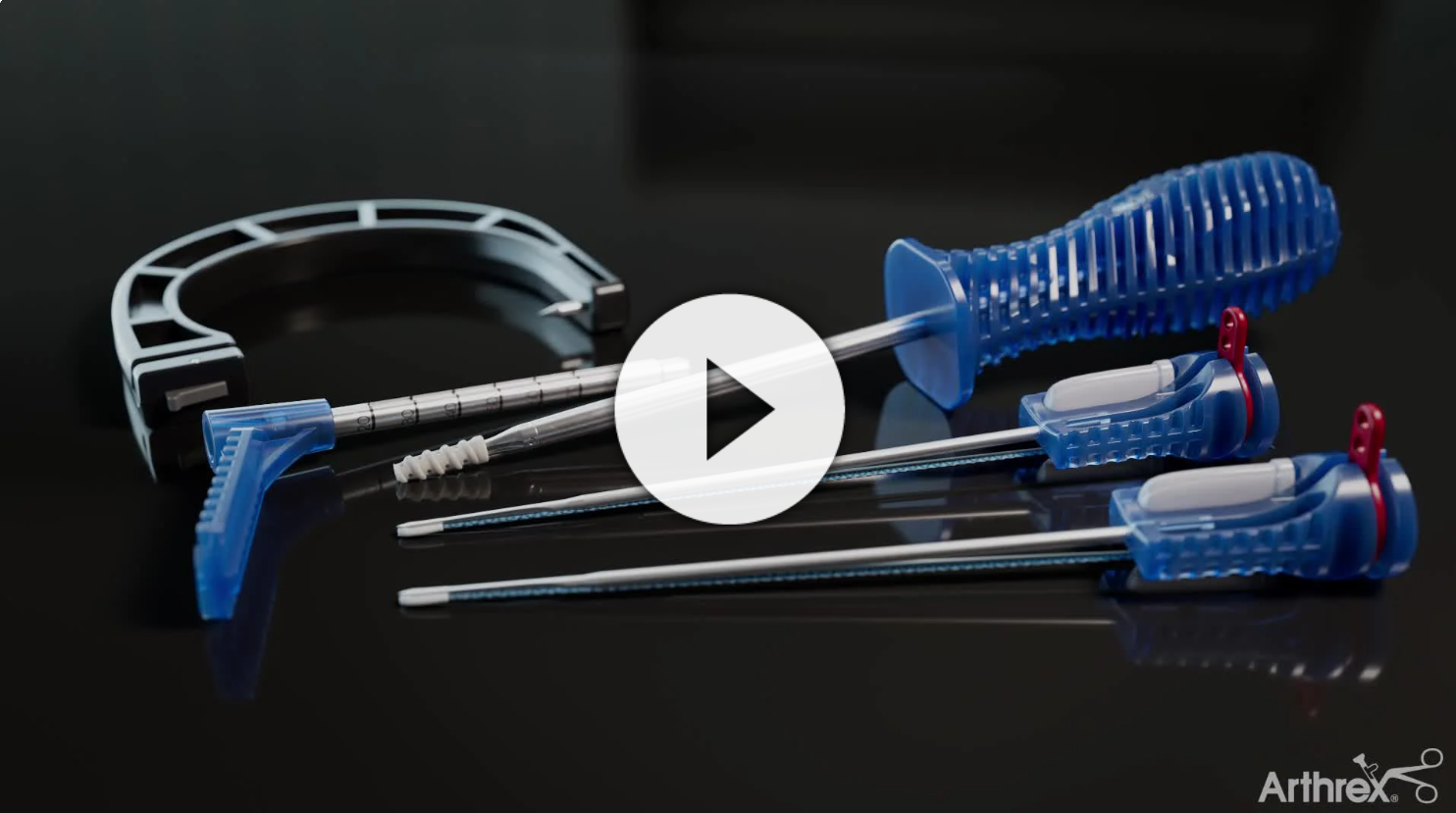
For additional insight into MPFL reconstruction surgery, Dr. Aaron Schwartz recommends this video, shared courtesy of medical device company Arthrex, to help patients understand and prepare for this treatment option.
Frequently Asked Questions
The medial patellofemoral ligament, or MPFL, is a ligament on the inside of the knee that helps prevent the kneecap from moving too far toward the outside of the knee.
The MPFL can become stretched or torn after a patellar dislocation or other instability event.
Many first-time patellar dislocations can be treated without surgery using bracing and physical therapy. MPFL reconstruction surgery may be considered for patients with recurrent patellar instability or selected patients at high risk for another dislocation.
Other factors, including the shape and alignment of the knee, may also influence treatment.
During MPFL reconstruction, a tendon graft is used to recreate the function of the damaged ligament. The graft is secured between the thighbone and kneecap in a position designed to restore patellar stability.
Some patients may require additional procedures to address other anatomic factors contributing to instability or pain, including a tibial tubercle osteotomy and/or an osteochondral allograft transplantation.
Recovery typically involves an initial period of bracing and gradual progression of knee motion and weight bearing, followed by strengthening and functional rehabilitation.
Return to running and sports generally takes 5-6 months and depends on recovery of strength, motion, and knee stability.
Many patients return to sports following MPFL reconstruction and appropriate rehabilitation. Return-to-sport decisions are based on strength, stability, movement mechanics, and sport-specific demands rather than a specific time alone.
Potential risks include infection, stiffness, persistent pain, recurrent instability, over- or under-correction of the kneecap, blood clots, nerve irritation, and the need for additional surgery.
The goal of MPFL reconstruction is to restore stability and reduce the risk of recurrent patellar instability. Outcomes depend on the patient’s anatomy, associated injuries, surgical technique, and rehabilitation.
Is MPFL Reconstruction Right for You?
Treatment for patellar instability depends on the cause and severity of the problem. An orthopedic evaluation can determine whether MPFL reconstruction in Portland or another treatment is appropriate.
Schedule an evaluation to discuss recurrent kneecap dislocation or instability. Dr. Aaron Schwartz is based in Portland, Oregon at The Oregon Clinic Orthopedics.