
Learn How a Partial Knee Replacement (Unicompartmental Knee Arthroplasty) Can Help You Get Back to Activities You Love Without Knee Pain
If knee pain limits your ability to walk, hike, golf, ski, or simply enjoy daily life, partial knee replacement with fellowship-trained joint reconstruction specialist Dr. Richard Auran can help you return to an active lifestyle.
Based in Beaverton, Oregon, Dr. Auran provides personalized partial knee replacement surgery using advanced surgical techniques designed to reduce pain, speed recovery, and restore natural movement.
Use this guide to help you understand what is involved in a partial knee replacement and how it may help increase your quality of life.
What Is Partial Knee Replacement?
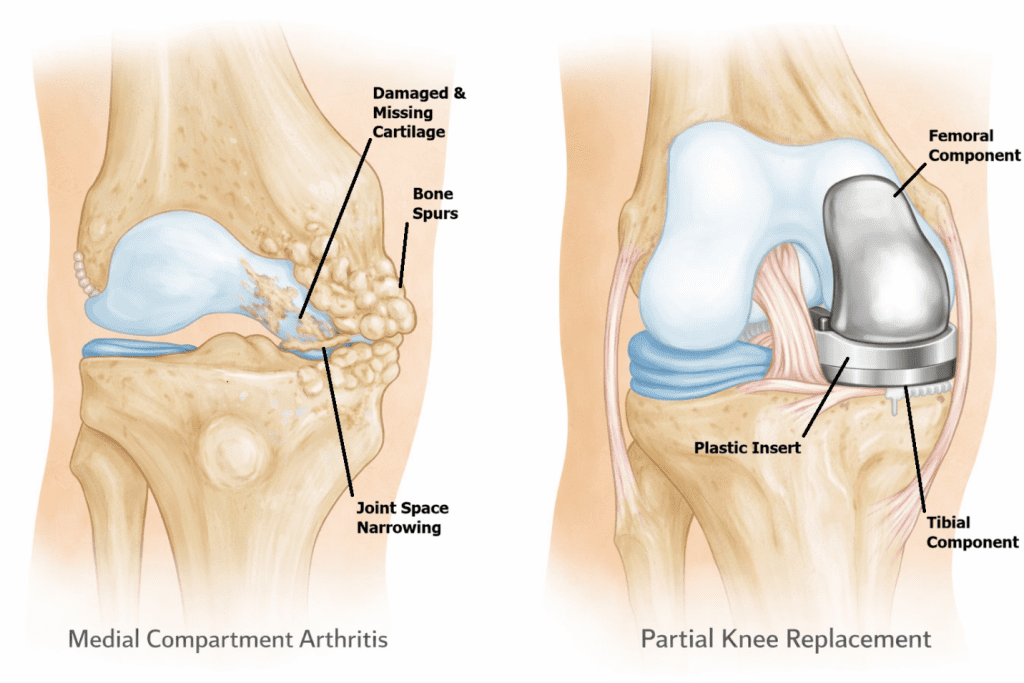
Partial knee replacement (unicompartmental knee arthroplasty) is a safe and effective surgical procedure that relieves pain, restores mobility, and improves quality of life for people with severe knee joint damage limited to one area (“compartment”) of the knee. During surgery, the worn or damaged compartment of the knee joint is replaced with a prosthetic implant designed to move smoothly and naturally.
The knee has three compartments: medial (inside, and most commonly affected), lateral (outside), and patellofemoral (behind the kneecap). A partial knee replacement resurfaces only the damaged compartment, preserving the healthy bone, cartilage, and ligaments in the rest of the knee.
Who Needs Knee Replacement Surgery?
You may be a candidate for partial knee replacement surgery if you have:
- Severe knee pain limited to one area of the knee that limits daily activities
- Pain that continues despite medication, physical therapy, or injections
- Knee arthritis (osteoarthritis, post-traumatic arthritis)
- Osteonecrosis (avascular necrosis)
- There must not be any evidence of pain or degenerative changes in the other compartments of the knee
Benefits of Partial Knee Replacement
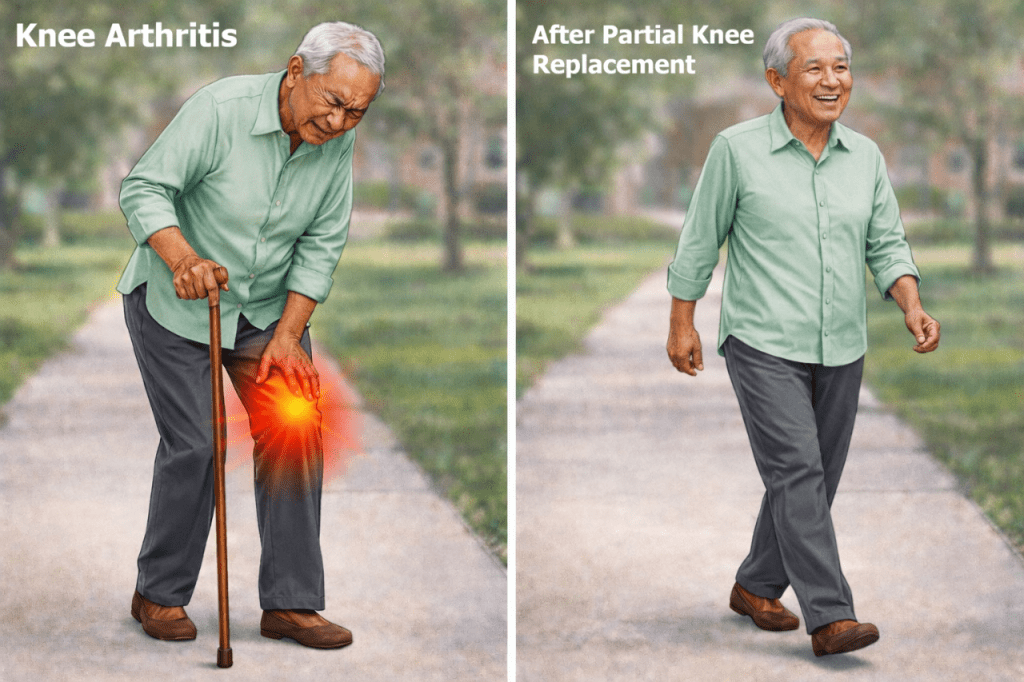
Patients who undergo a partial knee replacement commonly experience:
- Significant pain relief
- Improved walking and mobility
- Better sleep and daily function
- Return to sporting activities as desired
- Long-lasting results (15+ years for many implants)
- Less painful recovery and faster return to function compared to total knee replacement
- More normal feeling knee compared to total knee replacement
Understanding the Knee Implant
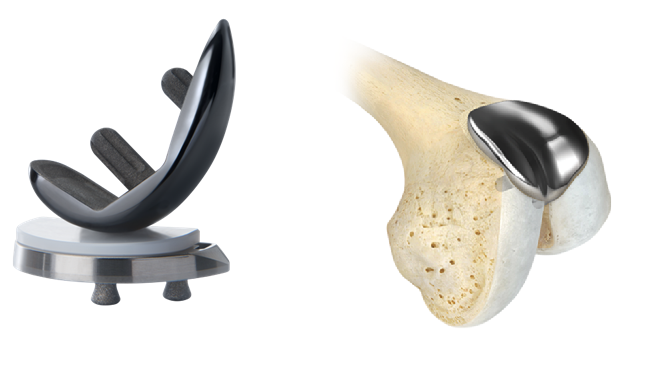
A partial knee prosthesis includes:
- Femoral component – metal piece that resurfaces the end of the thigh bone
- Tibial component – metal tray and plastic insert resurfacing the top of the shin bone
- In patellofemoral replacement, there is a patellar component and a trochlear (femoral) component
These components work together to create a smooth, low-friction joint.
The Knee Replacement Procedure: Step by Step
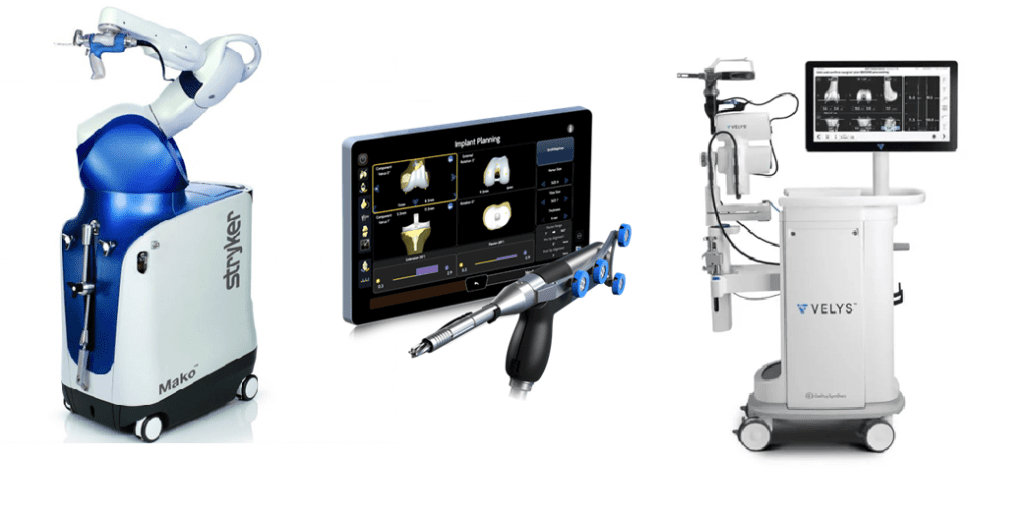
Here are the typical steps that Dr. Auran completes during a partial knee replacement procedure using advanced robotic techniques designed to minimize disruption to your body and accelerate rehabilitation.
- Remove damaged cartilage and bone
- Prepare the femur and tibia (or femur and patella)
- Place the artificial femoral and tibial components
- Close the soft tissue
Benefits of Robotic-Assisted Knee Replacement
- Precise alignment of components
- Personalized implant positioning
- May improve long-term joint function
Recovery and Rehabilitation
Immediately After Surgery
- Standing and walking (often the same day)
- Same-day discharge home in the majority of cases
- Pain controlled with modern multi-modal techniques
First Few Weeks
- Physical therapy starts early (3-4 days) to restore range of motion and strength
- Increasing independence with daily activities
- Gradual transition from walker → cane → unassisted walking as symptoms allow
Long-Term Recovery
- Many patients resume normal activities in 6–12 weeks
- Full healing continues for several months up to one year after surgery
Risks and Safety
Partial knee replacement is one of the most successful procedures in modern medicine, but like all surgeries it carries some risks, most commonly:
- Infection or wound healing issues
- Blood clots
- Implant loosening or wear over time
- Stiffness or reduced range of motion
- Progression of arthritis in the other knee compartments
Dr. Auran and his surgical team use advanced protocols to minimize these risks.
Preparing for Knee Replacement
Having knee surgery is a big decision and a big commitment! To achieve the best outcome for your partial knee replacement, we will encourage you to:
- Optimize your overall health
- Strengthen leg muscles and improve knee motion before surgery
- Prepare your home for safe recovery
- Arrange support for the first few days to weeks
Life After Knee Replacement
Dr. Auran does not place long-term restrictions. You can return to activities that feel comfortable after allowing time for healing. Most patients return to:
- Walking for exercise
- Sporting activity as desired
- Travel and daily activities without pain
Your Knee Replacement Journey
Working with an experienced high-volume knee replacement specialist and an experienced orthopedic team may lead to:
- Easier recovery
- Lower complication rates
- Better implant positioning
- More natural-feeling movement
Why Choose Dr. Richard Auran for Knee Replacement?
- Fellowship-trained in adult hip & knee reconstruction
- Expertise in primary and revision knee replacement, including partial knee replacement
- Advanced experience with multiple implant systems & robotic technology
- Focus on rapid recovery and long-term mobility
Dr. Auran partners closely with each patient to create an individualized treatment plan that relieves pain and restores function so they can return to the activities they enjoy. Here is a typical treatment pathway for Dr. Auran’s patients:
- Personalized Consultation – Review imaging, prior treatments, and goals.
- Pre-Surgery Optimization – Clear preparation plan for home and recovery.
- Surgery – Advanced techniques focused on precision and safety.
- Rapid Recovery – Many patients walk the same day.
- Return to Activity – Many resume normal daily activities in 6–12 weeks.
If knee pain limits your life, partial knee replacement may help you return to the activities you love.
Call today to schedule your consultation and learn about personalized treatment options.